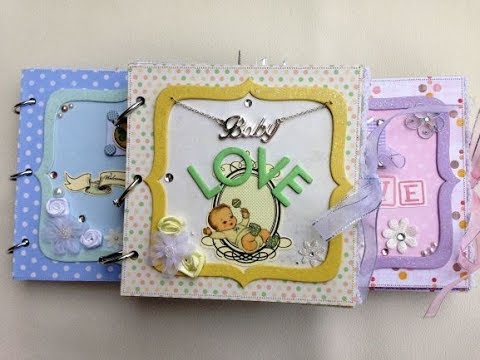
If you're expecting a new baby in your life — or looking for a meaningful handmade gift for someone who is — these baby memory keeper albums might be exactly what you need to see. This is a flip-through and quiet reflection on a small batch of handmade mini albums I put together for documenting a baby's first year, shown across a gender-neutral version and a pink baby-girl version, with a close look at everything tucked inside.
What we cover
A flip-through of two completed baby memory keeper albums — one gender-neutral in pinks and greens, one in soft baby pink — showing every internal element: pockets, journaling spots, flip-out panels, envelopes, mini booklets, acetate pockets, tags, and closures. I also share how I envisioned these being used, and a few honest thoughts on the making process.
What you'll learn
How the albums are structured page by page, including:
- A front-page details spread for recording name, birth date, time, weight, and length
- Repeating pocket-and-tag combinations throughout, each with journaling spots for milestones and memories
- Flip-out and flip-down panels that open to reveal photo spots and writing space
- A magnetized closure panel with room for photos, journaling, and mementos
- A back-cover glassine envelope with a handmade tag tucked inside
Why I sewed the pages together rather than gluing them — on the first few albums I glued the scrapbook pages back-to-back, and it took significantly longer. Switching to machine sewing not only sped things up, it also made the whole structure sturdier. The pages on these won't be coming apart.
How acetate pockets and glassine bags add layering and texture — the clear pocket on each spread lets you see what's inside while keeping small items protected. The glassine envelope at the back is a lovely spot for a tag, a photo, or even a small memento like a snippet of hair.
How to repurpose materials with personal meaning — the little cardboard tag on one of the girl albums is cut from a box of chocolates I was given when my daughter was born. Using materials like that adds a layer of sentiment you simply can't buy.
How to build a consistent album across multiple copies, including:
- Using the same papers and elements across each version while varying the colorway
- Keeping the internal structure largely the same so the experience of using any copy feels cohesive
- Writing down every step, every glue used, every material, so you can reproduce it accurately later — because when you're deep in the making, it's easy to forget exactly what you did
Why the first-year framing matters — babies change so fast. Week by week there are new things, new expressions, new milestones, and most of it slips away before you think to write it down. An album with specific spots — for photos, for firsts, for little notes — makes it easier to actually capture those moments rather than always meaning to.
Tips & gotchas
Sew pages together rather than gluing. I made the first few albums by gluing scrapbook pages back-to-back and it was slow, sticky, and frustrating. Once I switched to machine sewing the folded edges, things moved much faster and the pages came out cleaner. If you have a sewing machine, use it.
Write everything down as you go. I keep notes on every step — which glues I used, which papers, how I constructed each element. It sounds like extra work but it's the only reason I can reproduce these. Memory keeping albums are ironic in this way: if you don't document making the album, you lose the ability to make another one exactly like it.
Give yourself permission to leave things for the recipient to fill in. Some of the envelopes on these albums are intentionally left empty — a snippet of the baby's hair, a favourite photo, a first drawing. The album works better as a living thing the new parent fills over time, not a finished object that's complete the moment it's gifted.
Dry pages under weight. Any glued sections, especially where thick papers meet, benefit from drying under something heavy. It keeps the pages flat and avoids warping that becomes very obvious once the album is bound.
These take longer than you think. I made nine of them and won't be underestimating the time again. If you're making one as a gift, start earlier than feels necessary. The details — the lace, the buttons, the little handmade booklets — are what make the album special, but they each take time.
I understood what she meant, but that's exactly what it's for. Something handmade, filled with photos and scribbled notes and a curl of hair tucked in an envelope, becomes more precious the more it's used. Years from now, those little entries about first smiles and first words and what the baby weighed on the day they came home are the things you'll want to have. That's what I had in mind when I made these, and it's the thought I'd pass on to anyone making something similar.


