If you've ever looked at a cereal box, a used tea bag, or a pile of junk mail and thought there has to be something I can do with this — this video is for you. I walk through ten categories of completely free materials you can collect and use in junk journals and handmade books, with plenty of real examples of what each one can become. These aren't ten individual items either; each category opens up into dozens of possibilities once you start looking at everyday things with different eyes.
What we cover
Ten broad categories of free, upcycled materials — napkins, tea bags, cereal box liners, boxes, packaging, junk mail envelopes, greeting cards, magazines and printed matter, old clothing, and broken jewellery and accessories — with finished examples for each and links to dedicated tutorials where relevant. I also sneak in an eleventh at the very end: nature.
What you'll learn
How to use restaurant napkins as a texture layer on journal covers — glued messily over a cereal box base, painted black, and dry-brushed with gold, they create something that genuinely looks like aged leather. The same technique works with tissue paper from packaging if you don't have napkins on hand.
How to use dried tea bags as a vintage-making tool, including:
- Laying an opened tea bag over magazine images or atlas pages to give them an aged, sepia quality
- Folding them into small pockets on journal pages
- Incorporating loose tea from the bags into faux handmade paper for texture
How to make faux handmade paper using tea bags, loose dried herbs or tea leaves, and leftover thread ends — no blender, no mold and deckle, no special setup required. The result has the look of handmade paper with almost none of the effort.
How to turn cereal bag liners into see-through pockets — decoupaged onto book pages and sewn around the edges, they become clean, functional pockets for a journal. Also usable as tab material when cut into small strips and secured with a staple.
The range of things a cereal box or cardboard box can become, including:
- Full-size journals with wide spines and multiple signatures
- Mini journals from small packaging boxes (Ikea boxes, skincare boxes, anything with a good footprint)
- Tags, circle embellishments, and shaped pieces — cut by hand if you don't have punches
- A base for the napkin-texture technique described above
How to make storage pouches from clothing packaging bags — the clear or semi-clear bags that bedding and school uniforms come in. Sewn into different sizes, they work as presentation pouches for selling journals, or as protective sleeves for taking a journal out with you.
Using bubble wrap, corks, foam sponges, and bottle caps as mark-making tools for backgrounds and page texture. None of these require any special preparation — press them into paint or distress ink and apply to paper.
How to build a journal entirely from used greeting cards — painted over to cover the writing, then collaged, pocketed, and embellished. Candle wax or beeswax rubbed across the painted pages keeps them from sticking together.
How to use cellophane from florist packaging as a pocket or shaker element — florists often have offcuts they'd otherwise bin, so it's worth asking. Because glue doesn't bond well to cellophane and plasticky surfaces, sewing around the edges is the more reliable way to attach it.
Using junk mail envelopes as journal structures, including:
- Full journals sewn or glued from stacked envelopes
- Pocket inserts with the envelope windows left open for a display effect
What to do with canceled and vintage stamps — use them as small focal-point embellishments on pages, or cut images from stamp catalogs found in thrift stores if you can't find actual vintage stamps.
How to transform old faux-leather clothing and fabric offcuts, including:
- Cutting pockets cleanly from old jeans to use as functional journal pockets
- Removing hardware (zippers, buttons, bling trim) to use as charms, brads, and closures
- Saving lace trims from stained or worn clothing
- Cutting baby blankets into strips, tea-dyeing them, and using them as closures or tag toppers
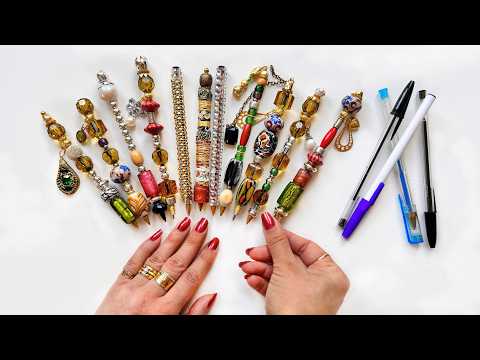
How to use broken jewellery and bag hardware as journal closures and spine embellishments, including:
- Threading a broken necklace chain through a binding as a closure
- Clipping a shank button or pendant to a spine with a paperclip so it hangs as a charm
- Using boot lacing hardware or bag handles as structural spine details
How to roll paper beads from magazine pages — time-consuming but satisfying work to do in front of the TV, and the finished beads take nail polish well for a sparkly finish.
Making paper flowers from cookbook and magazine pages — cut by hand, no die cuts needed. You can't tell what the original image was once the flower is assembled.
Finding words, phrases, and cut sentences in magazines and catalogs to use as journaling prompts, title pieces, or page embellishments — without scanning or copying, just using the original printed piece.
Tips & gotchas
Cereal bag liners need a proper wash before they go anywhere near your journal. Even a small amount of food residue left in there will cause problems later, so rinse them really well and let them dry completely before using.
When you paint over greeting cards or any thick paper stack, the pages will stick. Run a candle — or a piece of beeswax — across each page after painting. It leaves a thin film that stops them bonding together, and it's much easier than trying to separate stuck pages after the fact.
Cellophane and other plasticky packaging materials don't glue reliably. If you want a cellophane pocket or window element to actually hold, sew around it rather than relying on adhesive.
One of the most useful things I've taken from years of doing this: you don't have to keep the whole thing. A jacket that's falling apart can give you its zipper pull, its lining, its buttons, and a few fabric panels without you needing to store the entire jacket. Keep the portion that's useful and let the rest go. The same applies to gift bags, maps, packaging — take what you'll actually use, not everything that could theoretically be used.
On copyright: it's fine to cut an image out of a magazine and use it in a journal you make or sell, because you're using the original printed piece. What you can't do is scan it and reproduce copies. Use the original and you're in the clear.
If you want lace, sequin trim, or fabric offcuts but don't have anything to cut up at home, your local seamstress is a genuinely good source. They generate offcuts constantly and most of it goes in the bin — it's worth asking.
You pick up a broken zipper or a florist's cellophane offcut and the idea arrives once it's in your hands, not before. Nature works the same way: a branch, a pressed leaf, a handful of things picked up from the garden. Once you start asking what could I make with this rather than what is this for, the answer usually appears pretty quickly — and it leads somewhere you didn't expect.